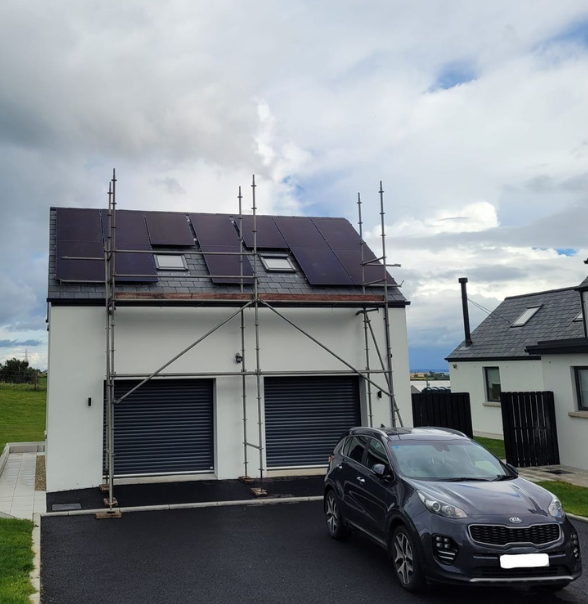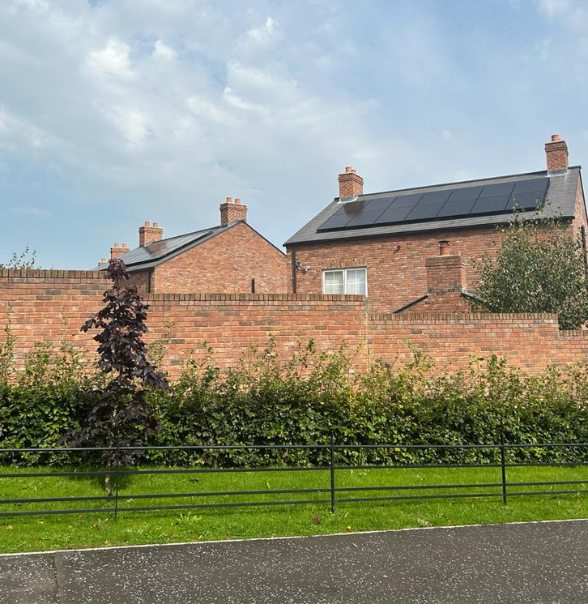
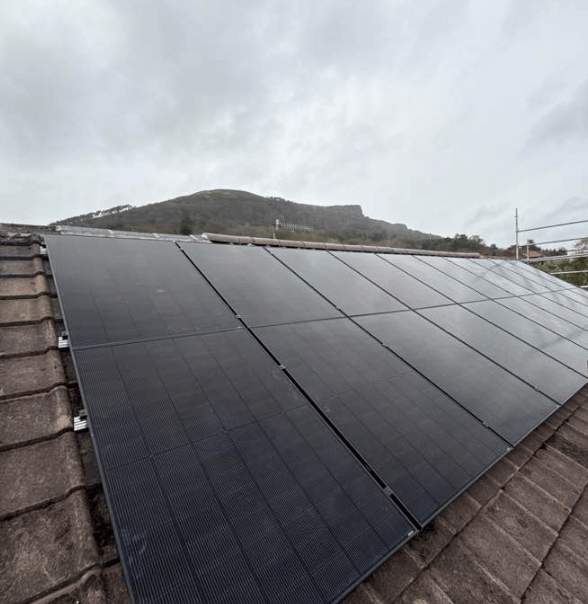
Modern solar panels can continue producing energy in cloudy, overcast and low-light conditions, making solar PV a highly effective renewable energy solution for Northern Ireland’s changeable climate. Solar panels use photovoltaic (PV) cells to convert light energy into electricity and, while direct sunlight provides the strongest conditions for generation, they can also effectively use diffuse sunlight – essentially, daylight that passes through clouds and the atmosphere.
Solar panels therefore don’t simply stop generating electricity when the sun disappears behind the clouds. They continue producing energy from available daylight, although output will naturally vary with light levels. Advances in solar technology, including increasingly efficient solar cell and module designs, are helping modern panels make more effective use of available light and reduce electrical losses. At BlueBuild Energy, we design and install high-quality solar systems to help maximise energy generation throughout the year.
Because solar panels rely on light rather than heat, colder temperatures don’t prevent them from generating electricity during winter. However, shorter daylight hours, a lower sun position, seasonal shading and cloudier weather can reduce overall generation. This makes professional system design and positioning particularly important for maximising available winter daylight, from panel placement and orientation through to ensuring the inverter is correctly specified for the overall system.
Cloud cover will also influence solar performance. While output will typically be lower than on a clear, sunny day, daylight can still pass through clouds and reach your panels. Generation will depend on factors including cloud density, panel efficiency, system size, roof pitch and orientation, and surrounding shade. Modern solar technology can continue generating renewable electricity in lower-light conditions and, when paired with battery storage, can help homeowners make greater use of the energy they generate and reduce reliance on electricity from the grid throughout the year.