Northern Ireland is continuing to make significant progress towards a more renewable energy system. According to the latest figures from the Department for the Economy, 53% of electricity generated in Northern Ireland during the 12 months to June 2026 came from renewable sources, compared with 47% from non-renewable sources.
A total of 8,286 GWh of electricity was generated during the period, with 4,431 GWh coming from renewable sources. When electricity imports and exports are taken into account, renewable generation was equivalent to 50% of Northern Ireland’s gross final electricity consumption, up from 44% during the previous 12-month period, source: https://www.economy-ni.gov.uk/news/electricity-consumption-and-renewable-generation-northern-ireland-year-ending-june-2026
The figures represent an important step towards Northern Ireland’s target of meeting at least 80% of electricity consumption from renewable sources by 2030 and highlight the increasing role that locally generated renewable energy is playing within the electricity system.
Wind remains the largest source of renewable electricity in Northern Ireland, accounting for approximately 74% of renewable generation, followed by bioenergy at 18% and solar at 6%. While solar currently represents a smaller proportion of overall renewable generation, it provides homeowners with something particularly valuable – the opportunity to generate renewable electricity directly at their own property.
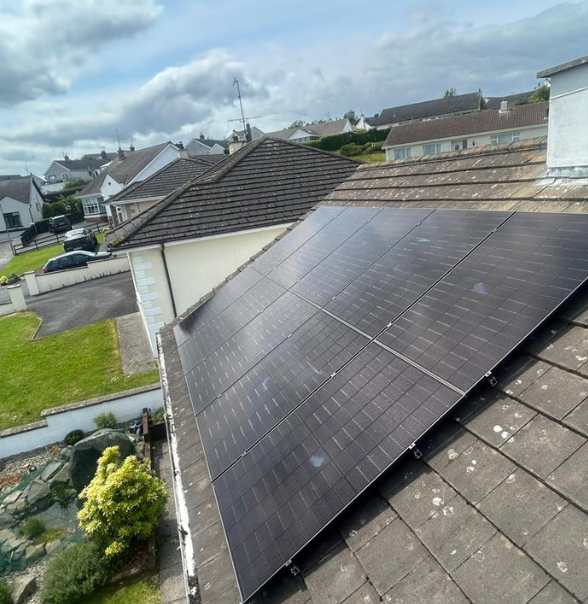
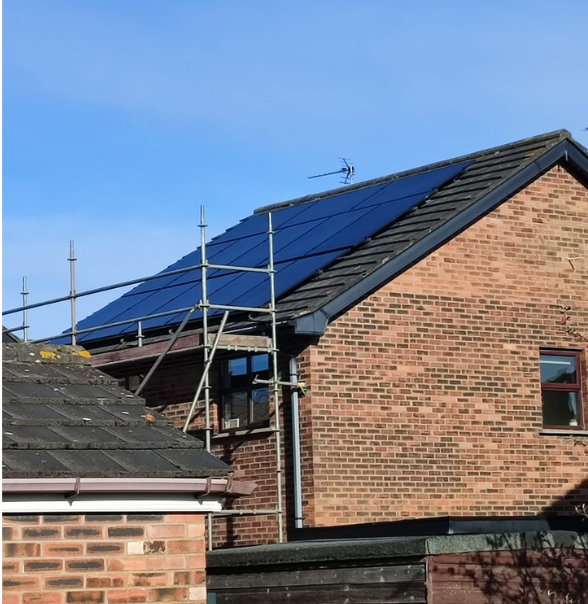
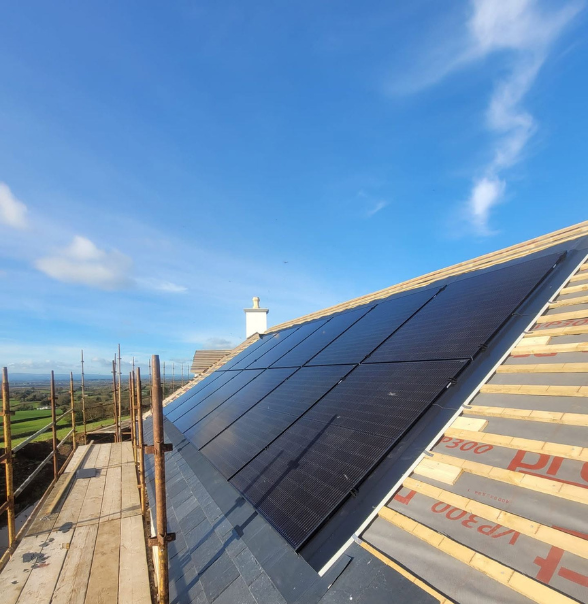
A professionally designed solar PV system converts daylight into electricity that can be used throughout the home, helping reduce the amount of electricity that needs to be purchased from the grid. Solar panels generate from daylight rather than heat, which means they can continue producing renewable electricity throughout Northern Ireland’s changing seasons, although overall generation will naturally vary depending on daylight hours, weather conditions, system design and the individual property.
For homeowners, generating electricity at home can also provide greater control over their household energy. Wholesale electricity and fossil fuel prices can rise and fall in response to wider market conditions, but electricity generated by your own solar panels reduces the proportion of your household demand that needs to be met by electricity purchased from an energy supplier.
Battery storage can further increase the amount of self-generated electricity used within the home. Surplus solar electricity produced during periods of stronger generation can be stored and used later, such as during the evening when household demand may be higher but solar generation has reduced. This can help homeowners make greater use of the renewable electricity generated at their property and further reduce reliance on the grid.
As Northern Ireland moves towards its 2030 renewable electricity target, domestic solar PV has an important role to play alongside larger renewable energy projects. At BlueBuild Energy, we have been MCS-certified since 2011 and design solar PV and battery storage systems around the individual property, available roof space and household energy requirements, helping homeowners generate more of their own renewable electricity throughout the year.